
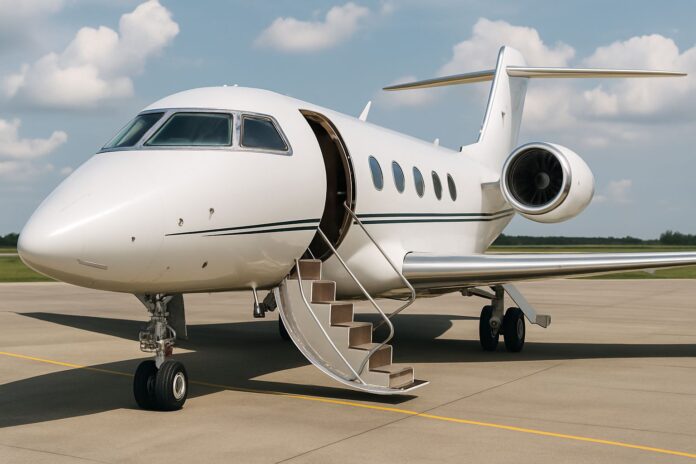

Article-At-A-Glance: Flexible Modern Private Jet Charters
- Flexible modern private jet charters let you fly on your schedule, to airports commercial airlines often skip, with zero layovers and maximum privacy.
- Empty leg flights — a lesser-known industry secret — can dramatically reduce the cost of flying private, and Flyades makes accessing them straightforward.
- Digital-first booking platforms have eliminated the outdated, phone-heavy process that once made chartering a jet feel like a full-time job.
- For groups, private charters frequently compete with — and sometimes beat — the per-person cost of commercial first class.
- Keep reading to discover how in-flight connectivity, direct routing, and personalized service combine to make private aviation the most productive way to travel.
Private jet travel is no longer just for billionaires — the way charters are booked, priced, and experienced has fundamentally changed.
The modern traveler expects flexibility, transparency, and speed — not just in the air, but in every step of the process. Whether you’re a C-suite executive managing a packed quarterly schedule or a high-net-worth individual who values time above everything else, the old model of private aviation simply doesn’t cut it anymore. Rigid contracts, opaque pricing, and slow booking processes belong to a different era.
Flyades Redefines What Private Jet Travel Looks Like
Flyades has built its reputation around one core idea: private jet travel should work around you, not the other way around. That means on-demand scheduling, a diverse fleet, transparent pricing, and a digital booking experience that respects your most finite resource — time. What used to require multiple phone calls, broker negotiations, and days of back-and-forth can now happen in minutes.
The private aviation industry has been slow to modernize, but that’s changing fast. Platforms like Flyades are leading the charge by combining deep industry expertise with the kind of seamless digital experience travelers expect from every other premium service they use.
- On-demand scheduling with departures built around your calendar, not an airline’s hub rotation
- Access to thousands of aircraft globally, from turboprops to large-cabin jets
- Transparent pricing with no hidden fees buried in fine print
- Empty leg flight access for travelers who want private aviation at a fraction of the standard rate
- Digital booking that confirms your charter in hours, not days
This isn’t a marginal upgrade from commercial travel — it’s an entirely different category of experience.
The Problem With Traditional Private Jet Booking
For decades, booking a private jet meant navigating a fragmented, broker-heavy industry where pricing was murky, availability was unclear, and the process itself required significant effort. The experience was exclusive, yes — but not in a good way. It excluded efficiency.
Most traditional charter operators built their businesses around relationships, not systems. That worked in an era where private aviation clients had dedicated travel assistants and limitless patience. Today’s clients have neither, and they shouldn’t need them.
The friction points aren’t just inconvenient — they’re costly. Every hour spent negotiating with brokers, waiting for quotes, or deciphering fuel surcharge policies is an hour pulled away from decisions that actually move the needle.
Rigid Scheduling That Wastes Executive Time
Traditional charter operators often require 24 to 72 hours of advance notice at minimum, with some routes demanding even longer lead times. For executives operating in fast-moving environments, that window simply doesn’t exist. A deal that closes on a Tuesday afternoon shouldn’t require you to wait until Thursday to fly — and with modern charter platforms, it doesn’t have to.
Hidden Costs That Make Budgeting Impossible
One of the most persistent frustrations in traditional private aviation is the gap between the quoted price and the final invoice. Fuel surcharges, repositioning fees, landing fees, catering minimums, and overnight crew costs can add 20 to 40 percent to what initially looked like a straightforward quote.
This isn’t just an inconvenience — it makes meaningful travel budget planning nearly impossible. Finance teams can’t forecast accurately, and executives end up making decisions based on incomplete cost pictures. Modern charter services solve this with all-in pricing that’s clear before you commit.
Outdated Booking Processes That Slow Everything Down
Phone calls. Faxed contracts. PDF quotes that expire in 24 hours. The traditional private charter booking process was designed for a pre-smartphone world, and it shows. The irony is that an industry selling speed and efficiency has historically delivered neither in its own operations.
The expectation gap between how clients live their digital lives and how they’ve had to book private flights has never been wider — until platforms like Flyades started closing it.
How Flyades Makes Flexible Charter Booking Simple
Flyades approaches charter booking the way modern financial platforms approach banking — intuitive, fast, and built entirely around the user’s needs. The complexity doesn’t disappear; it just moves behind the scenes where it belongs.
On-Demand Scheduling Built Around Your Timeline
With Flyades, scheduling a private jet starts with your calendar, not a fleet availability chart. The platform’s booking infrastructure is designed to surface available aircraft quickly, match them to your route requirements, and confirm departure times that align with how you actually work.
Need to fly from Toronto to New York for a morning meeting and be back before dinner? That’s not an edge case on Flyades — it’s the standard use case the entire platform is built around. Same-day bookings are supported for many routes, and the confirmation process is streamlined enough that you’ll spend more time deciding what to pack than you will booking the flight.
Real-World Scenario: A client in Vancouver needs to attend an emergency board meeting in Calgary at 9 AM. Commercial options require arriving at the airport by 6 AM with connection risk. With Flyades, a light jet is confirmed the night before, departing at 7:30 AM from a private terminal, arriving directly at Calgary’s Springbank Airport — 20 minutes from downtown — with zero security lines and full onboard Wi-Fi for prep time en route.
That’s not a luxury — that’s a competitive advantage.
Access to a Wide Network of Aircraft Types
Not every trip requires the same aircraft, and Flyades doesn’t treat them like they do. The platform connects travelers to a broad fleet spanning multiple aircraft categories, each suited to different routes, group sizes, and mission profiles.
A three-person team flying two hours doesn’t need a heavy cabin jet. A family of eight crossing the Atlantic does. Flyades matches the aircraft to the mission — not to a fleet management preference — which means clients get the right tool for the job at the right price point every time.
Digital-First Booking That Saves Hours
The Flyades platform eliminates the back-and-forth that has historically made private jet booking feel like a part-time job. From route selection to aircraft confirmation, the entire process is handled through a streamlined digital interface that delivers quotes, surfaces availability, and processes agreements without requiring a single phone call. For travelers who manage their entire professional lives from a phone or laptop, this is the baseline expectation — and Flyades meets it.
What used to take 48 hours of broker communication now takes under an hour. The platform handles the operational complexity — crew scheduling, aircraft positioning, permit clearances for international routes — invisibly, so the client experience stays frictionless from first search to wheels up. For more on how this innovation is revolutionizing travel, check out why private jet charters are revolutionizing business travel.
Empty Leg Flights: The Smartest Way to Fly Private for Less
Empty leg flights are one of the most underutilized advantages in private aviation, and for travelers who understand how they work, they represent a genuine opportunity to access private jet travel at significantly reduced rates. Flyades has built a dedicated system around surfacing these opportunities in real time — connecting cost-conscious private travelers to flights that would otherwise go empty.
What Empty Leg Flights Are and How They Work
When a private jet is chartered for a one-way trip, the aircraft still needs to reposition — either returning to its home base or flying to its next pickup location. That repositioning flight is called an empty leg. Since the operator is flying the route regardless, they’re willing to sell seats on that segment at a steep discount rather than absorb the full cost of an empty cabin.
The savings on empty leg flights can be substantial. Depending on the route, aircraft type, and timing, travelers can access private jet travel at 25 to 75 percent below standard charter rates. The trade-off is flexibility — empty legs are fixed in their routing and timing, so they suit travelers whose schedules can adapt to the opportunity rather than the other way around.
Empty legs aren’t a fringe product. They’re a structural feature of how the private aviation industry operates. Every one-way charter creates one, which means there’s a constant stream of available segments across global networks at any given time — the challenge has always been visibility and access.
Empty Leg Snapshot:
Route Standard Charter Rate Typical Empty Leg Rate Potential Saving Toronto → New York $12,000 – $16,000 $4,000 – $6,000 Up to 65% Vancouver → Calgary $8,000 – $11,000 $2,500 – $4,500 Up to 70% London → Paris $10,000 – $14,000 $3,000 – $5,000 Up to 75% Miami → New York $15,000 – $20,000 $5,000 – $8,000 Up to 60% Rates are representative estimates based on industry averages and vary by operator, aircraft type, and availability.
How Flyades Connects Travelers to Empty Leg Deals
Flyades maintains a live inventory of empty leg flights across its network, updated in real time as new one-way charters are confirmed. Rather than requiring clients to monitor a static list or rely on broker calls, the platform pushes relevant opportunities based on a traveler’s preferred routes and departure windows. It’s the kind of intelligent, proactive service that turns an industry inefficiency into a genuine client benefit.
The Flyades In-Flight Experience
Booking flexibility and competitive pricing get you on board — but what happens once the door closes is what makes private aviation genuinely transformative. The cabin experience on a Flyades charter isn’t an afterthought; it’s a core part of the value proposition, designed around how modern travelers actually use their time in the air.
Whether a three-hour domestic leg or a transatlantic crossing, every flight is configured to support productivity, rest, or both — depending entirely on what the client needs. That kind of intentional design is the difference between arriving refreshed and ready versus depleted and behind.
Cabin Comfort Designed for Productivity and Rest
Private jet cabins vary significantly by aircraft category, but across the Flyades fleet, the emphasis is consistent: space, quiet, and ergonomic design that supports extended work or genuine rest. Light jets like the Cessna Citation CJ3+ offer efficient cabins ideal for short-haul focus work, while large-cabin aircraft like the Bombardier Global 6000 provide stand-up headroom, dedicated sleeping areas, and conference-style seating for teams that need to work through a crossing.
The absence of middle seats, overhead bin battles, and cabin announcements every 20 minutes isn’t a small detail — it fundamentally changes how your body and mind experience a flight. Clients consistently report arriving at destinations more cognitively sharp after a private charter than after a commercial business class seat, even on equivalent flight durations.
Personalized Catering and Onboard Services
Commercial airline catering is built for scale. Private charter catering is built for you specifically. Flyades coordinates with preferred catering partners at departure airports to deliver menus that reflect individual dietary requirements, cultural preferences, and even specific brands of food and beverage clients request. There’s no meal cart, no “chicken or pasta” — just exactly what you asked for, presented properly.
The onboard service standard extends beyond food. From preferred newspaper formats downloaded for offline reading to cabin temperature preferences logged from a previous flight, the operational details that seem small individually combine into an experience that feels genuinely considered. That level of attention is what separates a private charter from a slightly more comfortable commercial seat.
- Custom menus coordinated ahead of departure with dietary and preference specifics
- Premium beverage selections including specific wine labels, spirits, and non-alcoholic options on request
- Fresh catering sourced from airport-proximate partners for departure-day freshness
- Allergy-safe preparation with full transparency on ingredients and sourcing
- Cabin setup customization — from meeting-style seating arrangements to rest configurations pre-set before boarding
None of these details require a separate conversation on the day of travel. They’re captured once, remembered across bookings, and delivered consistently — exactly the way premium service should work.
High-Speed Connectivity for Business at Altitude
Lost productivity used to be an accepted cost of air travel. That calculation doesn’t apply anymore — at least not on a Flyades charter. Modern private jets equipped through the Flyades network offer high-speed satellite connectivity capable of supporting video conferencing, large file transfers, and real-time collaboration tools at cruising altitude without the throttled speeds that make commercial in-flight Wi-Fi nearly unusable for serious work.
For executives who live in communication-intensive roles, the ability to run a full working session at 45,000 feet isn’t just convenient — it recaptures hours that would otherwise be written off. A four-hour transatlantic leg becomes four billable hours, four hours of client calls, or four hours of focused deep work that’s impossible in a busy office.
The connectivity infrastructure varies by aircraft, and Flyades is transparent about which jets in the fleet carry which systems. Clients who prioritize connectivity can filter accordingly during the booking process, ensuring they board an aircraft that meets their specific operational requirements — not just their size and range needs.
- Ku-band and Ka-band satellite systems on larger aircraft for highest-speed connections
- Video call-capable bandwidth on most mid-size and large cabin jets
- Multiple device support across the full passenger group simultaneously
- Secure network options for clients with data sensitivity requirements
Why Business Travelers Choose Flyades Over Commercial First Class
The comparison between private charter and commercial first class isn’t just about comfort — it’s about control. First class buys you a better seat on someone else’s schedule, routed through hubs that serve the airline’s network rather than your itinerary. Private charter puts the entire operation in service of one objective: getting you where you need to be, when you need to be there, in the condition to perform.
When you factor in group travel, the economics shift even further. A commercial first-class ticket on a transatlantic route can run $8,000 to $15,000 per person. A midsize private jet on the same route, shared across five or six travelers, can land at a comparable or lower per-seat cost — with none of the scheduling compromises, none of the public terminal exposure, and none of the lost hours in connecting airports.
Direct Routes to Smaller Airports Commercial Airlines Skip
Commercial airlines operate on hub-and-spoke networks designed to maximize passenger load, not to serve your specific origin and destination. That means connections, layovers, and ground transfers that can easily add three to five hours to a trip that a private jet handles direct. Flyades routes flights through thousands of airports worldwide — including regional and private terminals that commercial carriers never touch — putting you significantly closer to your actual destination on both ends of the journey.
In North America alone, there are over 5,000 public-use airports. Commercial airlines serve fewer than 500 of them. The gap between where a commercial flight drops you and where you actually need to be is a hidden time cost that rarely shows up in a ticket comparison — but it absolutely shows up in your day.
Privacy That Commercial Cabins Simply Cannot Offer
Privacy on a private jet isn’t just about having a quiet seat — it’s about controlling who is in the cabin entirely. Sensitive business discussions, confidential negotiations, family dynamics, and personal circumstances don’t belong in a shared cabin with 200 strangers and flight attendants working a 12-hour shift. On a Flyades charter, the passenger manifest is yours to define, and the conversation stays exactly where you intend it to.
For high-profile executives, public figures, and anyone who values discretion, the private terminal experience extends the privacy envelope well beyond the cabin. No shared lounges, no public check-in counters, no cameras in the gate area. You arrive, you board, you go — with a level of operational security that commercial travel structurally cannot provide.
Flyades Is the Future of Modern Private Aviation
The private aviation industry is at an inflection point. Demand for flexible, transparent, and digitally accessible charter services has surged, and the operators who built their businesses on relationships and phone calls are being outpaced by platforms that understand what modern travelers actually need. Flyades sits squarely at the leading edge of that shift — combining fleet depth, booking technology, and genuine service expertise into a product that works the way clients expect everything else in their lives to work.
The future of private jet travel isn’t about exclusivity for its own sake. It’s about efficiency, control, and an experience calibrated precisely to the person in the cabin. Flyades has built exactly that — and for travelers who have experienced it once, going back to any other model of air travel becomes genuinely difficult to justify.
Frequently Asked Questions
Private jet charter questions tend to cluster around the same themes: timing, aircraft options, reliability, and cost. The answers below reflect how Flyades specifically approaches each of these areas — no generic industry responses, just the operational realities of booking through the platform. For more insights on why private jet charters are transforming travel, check out this article.
If a question isn’t covered here, the Flyades team operates with the kind of responsiveness that makes getting a direct answer faster than searching for one.
How Far in Advance Do You Need to Book a Flyades Charter Flight?
Flyades supports bookings across a wide range of lead times, from weeks out to same-day requests on many domestic routes. The platform is built to handle last-minute demand without the premium surcharges that traditional operators attach to short-notice bookings. For international flights requiring overflight permits — particularly into certain African, Middle Eastern, or Central Asian airspace — 24 to 48 hours of lead time is recommended to ensure all clearances are in place before departure.
For most North American and European routes, a same-day or next-morning departure is operationally achievable. The key variable is aircraft availability at your departure location, which the Flyades booking system surfaces in real time so you know exactly what’s possible before you commit.
What Types of Aircraft Does Flyades Offer?
The Flyades network spans the full spectrum of private aviation — from turboprops and very light jets suited to short regional hops, through light jets like the Cessna Citation XLS and midsize options like the Hawker 900XP, up to large-cabin and ultra-long-range aircraft including the Gulfstream G650 and Bombardier Global 7500. Each category serves a different mission profile, and the platform’s matching logic ensures clients are presented with aircraft that genuinely fit their route, group size, and operational requirements.
The fleet is not proprietary — Flyades works across a broad operator network, which means availability is significantly higher than any single-operator platform can offer. That depth matters most when demand is high or departure windows are tight, ensuring that a confirmed booking stays confirmed.
Are Empty Leg Flights on Flyades Reliable?
Empty leg flights carry an inherent variability — because they exist as a function of the originating charter, changes to that charter can affect the empty leg. Cancellations, route adjustments, or schedule shifts on the primary booking can ripple through to the repositioning segment. Flyades is transparent about this reality and recommends empty leg travel for clients whose schedules have some flexibility, rather than those with hard, immovable commitments at the destination. For the right traveler profile, the savings more than justify the flexibility trade-off — but it’s important to enter the arrangement with accurate expectations.
Can Flyades Accommodate Last-Minute International Charter Requests?
Yes — with route-specific nuances. International charters require coordination across several operational layers: customs and immigration arrangements, overflight and landing permits, crew international qualifications, and ground handling at the destination. For well-traveled international routes — transatlantic, intra-European, North America to Caribbean — Flyades can move very quickly because the permit infrastructure is established and ground handling relationships are already in place.
For more complex international routing — remote destinations, politically sensitive airspace, or countries with lengthy permit processing times — last-minute requests are still possible but may face constraints on aircraft options or departure windows. The Flyades operations team handles this assessment immediately upon receiving a request, giving clients an honest picture of what’s achievable within their timeline rather than promising what can’t be delivered.
How Does Flyades Pricing Compare to First-Class Commercial Tickets for Groups?
The per-person economics of private charter shift substantially as group size increases. A solo traveler comparing private charter to a commercial first-class ticket will almost always find the charter more expensive in absolute terms — that’s an honest reality. But the calculation changes when you bring a team.
On a transatlantic route where commercial first class runs $10,000 per seat, a group of six is looking at $60,000 in commercial first-class fares. A large-cabin private jet on the same routing, depending on aircraft type and timing, can be chartered for $65,000 to $85,000 — a modest premium, or in some cases a comparable cost, for an experience that is categorically superior in every measurable dimension: scheduling control, routing efficiency, privacy, productivity, and arrival condition.
On shorter domestic routes, the comparison shifts even further in private aviation’s favor. A four-person group flying a two-hour leg can find private charter costs approaching business-class commercial fares per seat — with none of the scheduling friction and all of the time savings on both ends of the journey.
Flyades offers an unparalleled experience in private jet charters, combining luxury with flexibility. Whether you’re traveling for business or leisure, the convenience and comfort of private jet travel are unmatched. For those interested in understanding how private jet charters are revolutionizing business travel, check out this insightful article on why private jet charters are revolutionizing business travel.