
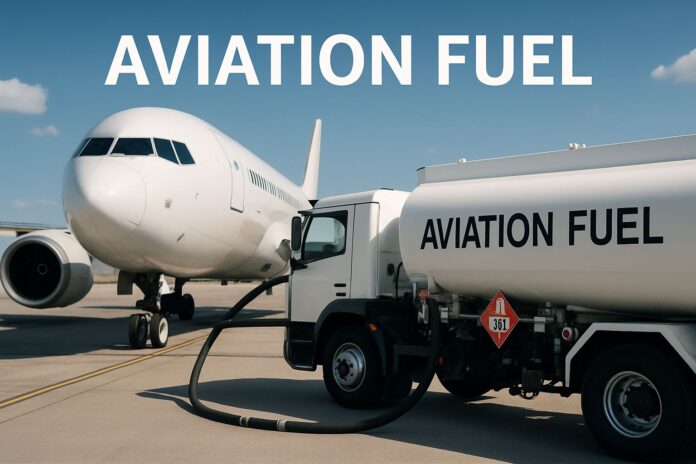

Article At A Glance: SAF vs Traditional Jet Fuel in 2026
- SAF has moved from sustainability talking point to regulated operational requirement — European mandates are already forcing airlines to blend a minimum of 2% SAF on flights uplifted at EU airports.
- Global SAF production approached two million tonnes in 2025, yet still represents well under 1% of total jet fuel consumption worldwide — the gap between ambition and reality remains significant.
- SAF currently trades at three to five times the cost of conventional jet fuel, driven by feedstock scarcity and high production costs, with meaningful price parity still years away.
- Airlines are locking in multi-year offtake agreements not because SAF is cost-competitive, but because access is becoming a strategic and regulatory necessity — those who wait may find supply already spoken for.
- The book-and-claim mechanism quietly reshaping how airlines account for SAF emissions is more controversial — and more important — than most coverage suggests. Keep reading to understand why.
The aviation industry has been talking about sustainable fuel for years, but 2026 is the year the conversation stopped being theoretical. Airlines operating at major European hubs are now legally required to use SAF blends, corporate sustainability commitments are being tested against real procurement decisions, and the price gap between SAF and conventional jet fuel remains stubbornly wide. Whether you’re tracking air cargo economics, airline strategy, or the future of aviation decarbonization, understanding how SAF actually compares to traditional jet fuel — technically, commercially, and operationally — is no longer optional background knowledge.
ResourceWise, which tracks biofuel and feedstock markets closely, provides ongoing market intelligence on SAF pricing dynamics and production trends that help frame the scale of what the industry is navigating. The core tension is straightforward: demand signals are accelerating while supply remains severely constrained, and the economics in between are being shaped as much by policy as by market forces.
SAF Is No Longer a Future Problem — It’s a 2026 Operational Reality
For most of the last decade, SAF occupied a comfortable space in aviation’s long-term planning documents. It was the fuel that would matter eventually. That changed when regulatory frameworks moved from voluntary targets to mandatory blending requirements, turning SAF from a sustainability preference into a compliance cost that shows up directly on fuel bills.
Global SAF Production Approached Two Million Tonnes in 2025
Global SAF production roughly doubled between 2024 and 2025, approaching two million tonnes by the end of the period. That growth rate sounds impressive until you measure it against actual demand. The entire commercial aviation sector burns through hundreds of millions of tonnes of jet fuel annually, meaning SAF’s share of total consumption remains well under one percent even at current production levels. The doubling of output confirmed that the industry can scale — it did not confirm that the industry is scaling fast enough.
SAF Still Represents Less Than 1% of Total Jet Fuel Consumption
The under-1% figure is the most important number in the SAF conversation right now. It contextualizes every airline commitment, every policy mandate, and every production milestone. Even the most aggressive projections for 2026 output do not move that needle dramatically. What it signals is not failure — the infrastructure and feedstock base required to move SAF to meaningful market share simply cannot be built in a three-to-five-year window. The trajectory matters more than the current share, but airlines and shippers operating today need to plan around today’s constraints, not tomorrow’s projections.
Regulation Is Driving Adoption Faster Than Market Forces
Left to pure market dynamics, SAF adoption would be far slower. At three to five times the cost of conventional jet fuel, no airline voluntarily absorbs that premium without external pressure. What changed the equation was the arrival of enforceable blending mandates — particularly in Europe — that removed optionality from the equation entirely. Regulation is now doing the work that carbon markets and voluntary sustainability pledges could not do alone, and that shift has fundamentally altered how airlines approach SAF procurement strategy.
How SAF and Traditional Jet Fuel Actually Differ
The term “drop-in fuel” gets used frequently in SAF discussions, and it matters enormously for understanding why SAF is commercially viable in a way that hydrogen or electric propulsion is not — at least not yet. But drop-in compatibility is just one part of the comparison. The differences between SAF and conventional jet fuel span chemistry, carbon accounting, feedstock origins, and production economics.
What Traditional Jet Fuel Is Made From
Conventional jet fuel — primarily Jet A and Jet A-1 — is a kerosene-based fuel refined directly from crude oil. The refining process separates and processes hydrocarbon fractions to produce a fuel with tightly controlled energy density, freeze point, flash point, and viscosity specifications. It is a mature, globally standardized product with deeply entrenched supply infrastructure, consistent availability at virtually every commercial airport on earth, and a cost base tied directly to crude oil prices. Its central problem is not performance — it is the carbon released when those hydrocarbons combust, carbon that was sequestered underground for millions of years and is now entering the atmosphere. For a deeper understanding of aviation fuel and its impact, you can explore the comparison of Boeing 737 vs Airbus A320 in terms of maintenance costs and intervals.
How SAF Is Produced and What Feedstocks Are Used
SAF is not a single fuel — it is a category of fuels produced through several distinct certified pathways, each using different feedstocks and conversion technologies. The most commercially active pathway in 2026 is Hydroprocessed Esters and Fatty Acids, or HEFA, which converts waste oils, animal fats, and used cooking oil into a jet-compatible fuel. Other approved pathways include:
- Fischer-Tropsch synthesis — converting municipal solid waste or forestry residues into synthetic hydrocarbons
- Alcohol-to-Jet (ATJ) — using ethanol or isobutanol as feedstock intermediaries
- Power-to-Liquid (PtL) — combining green hydrogen with captured CO₂ to synthesize fuel, the most capital-intensive pathway
- Catalytic Hydrothermolysis Jet (CHJ) — processing whole plant oils through a high-temperature water-based reaction
Each pathway has different carbon intensity scores, feedstock availability constraints, and production cost profiles. HEFA dominates current production because the technology is proven and the infrastructure partially overlaps with renewable diesel production — but that overlap also creates direct feedstock competition that is tightening supply.
Carbon Emission Reductions SAF Can Deliver Over Its Lifecycle
The emissions advantage of SAF is calculated on a lifecycle basis, meaning the full carbon journey from feedstock growth or collection through to combustion in the engine. On that basis, SAF can reduce lifecycle greenhouse gas emissions significantly compared to conventional jet fuel, with reductions varying by pathway and feedstock. The logic is that feedstocks like used cooking oil or agricultural residues have already absorbed CO₂ during their original lifecycle, so reusing them as fuel offsets a portion of the combustion emissions. Power-to-liquid fuels, if produced using genuinely renewable electricity, offer the deepest potential reductions of any current pathway.
Drop-In Compatibility: Why SAF Needs No New Aircraft or Engines
SAF is currently certified for use in blends of up to 50% with conventional jet fuel under ASTM D7566, the international standard governing approved alternative jet fuel specifications. At those blend ratios, SAF requires no modifications to existing aircraft, engines, fuel systems, or airport infrastructure. This is the single most commercially important technical characteristic SAF possesses — it can enter the existing aviation system without the trillion-dollar infrastructure overhaul that hydrogen or battery-electric alternatives would require. The 50% blend ceiling is a regulatory limit under current certification, not a technical one, and work is underway to certify 100% SAF operations.
The Regulations Forcing Airlines to Act Now
Policy frameworks are the most immediate force shaping SAF market dynamics in 2026. While long-term decarbonization targets like ICAO’s CORSIA framework set directional expectations, it is near-term binding mandates with real compliance consequences that are forcing procurement decisions today.
ReFuelEU Aviation: Europe’s 2% SAF Blending Mandate Explained
The ReFuelEU Aviation regulation is the most consequential near-term policy instrument in the global SAF market. Effective from 2025, it requires fuel suppliers at EU airports to ensure that aviation fuel offered to airlines contains a minimum SAF blend — starting at 2% and rising on a fixed trajectory in subsequent years. For airlines, this means any flight uplifted at an EU airport is now operating under mandatory SAF exposure whether or not the airline had any intention of voluntarily purchasing sustainable fuel. The regulation applies regardless of prevailing fuel prices, SAF availability challenges, or airline financial conditions — compliance is not discretionary.
The UK SAF Mandate and What It Means for Major Hubs
The United Kingdom introduced its own SAF mandate independently of the EU framework following Brexit, requiring a minimum 2% SAF blend in 2025 with a trajectory that reaches 10% by 2030 and 22% by 2040. For airlines operating heavy freighter or passenger operations through London Heathrow, Gatwick, and Manchester, this mandate reinforces cost pressure at some of the world’s busiest and most commercially sensitive hub airports. Unlike a voluntary sustainability program that can be scaled back when margins compress, the UK mandate creates a fixed compliance floor that fuel suppliers must meet regardless of market conditions — and those costs flow directly into airline fuel bills.
Which Jurisdictions Have the Clearest and Most Bankable Policy Frameworks
Policy clarity is not uniform globally, and that unevenness matters enormously for investment decisions in SAF production infrastructure. Europe currently leads in terms of binding, time-defined blending mandates with clear escalation schedules. The United States has taken a different approach, leaning heavily on tax incentives — particularly the Inflation Reduction Act’s blender’s tax credit structure — rather than mandated blending requirements. This creates a subsidy-driven demand environment rather than a compliance-driven one, which is more vulnerable to political change but has nonetheless catalyzed significant domestic SAF investment.
Outside of Europe and the US, policy frameworks remain fragmented. Some jurisdictions in Asia-Pacific have announced SAF targets or pilot programs, but few have enacted the kind of enforceable blending mandates that force immediate procurement behavior. For SAF producers evaluating where to build new capacity, the question of policy bankability — whether a government’s framework is stable enough to underwrite a long-term financing model — is as important as feedstock access or production economics.
Why SAF Costs More Than Traditional Jet Fuel
The price gap between SAF and conventional jet fuel is the central commercial challenge of the entire SAF market. It is not a temporary market distortion that will self-correct in the next quarterly cycle. It is the product of genuinely higher production costs, constrained feedstock supply, limited production capacity, and an infrastructure base that has not yet achieved the scale economies that make conventional jet fuel so cost-competitive.
Across 2024 and 2025, SAF traded at roughly three to five times the cost of conventional jet fuel — a premium that has persisted into 2026 with no dramatic near-term correction in sight. For an airline operating on margins that can sit in the low single digits in good years, absorbing a fuel cost that is three to five times higher on even a portion of total fuel volume is a material financial event. The question is no longer whether airlines want to pay the premium, but how they manage, allocate, and in some cases pass through that cost. For more insights, check out the 2026 Sustainable Aviation Fuel Market Outlook.
Understanding where the cost premium actually comes from requires looking at three distinct layers: feedstock economics, production pathway capital intensity, and distribution infrastructure costs. Each contributes to the final price, and each will need to improve — ideally simultaneously — before SAF can approach cost parity with conventional jet fuel at scale.
SAF vs. Conventional Jet Fuel: Cost and Production Snapshot (2026)
Factor Conventional Jet Fuel SAF (HEFA Pathway) Primary Feedstock Crude oil Used cooking oil, animal fats, waste oils Relative Price (2025–2026) Baseline 3–5x conventional price Lifecycle GHG Reduction Baseline Up to 80% reduction (pathway dependent) Current Global Supply Share >99% <1% Engine Modification Required None None (up to 50% blend) Airport Availability Universal Limited to major hubs
Feedstock Scarcity: Waste Oils and Residues Are in High Demand
Used cooking oil and animal fats — the primary feedstocks for the dominant HEFA production pathway — are not abundant commodities that can simply be produced on demand. They are waste streams with finite and geographically uneven supply. Global collection infrastructure is inconsistent, sustainability certification requirements are tightening, and crucially, these same feedstocks are in direct competition with renewable diesel production for road transport applications. The result is a feedstock market where SAF producers are bidding against renewable diesel refiners for the same limited pool of raw material, keeping input costs elevated even as production technology matures.
The scarcity dynamic is not purely a supply problem — it is also a quality and certification problem. As SAF mandates tighten sustainability criteria for what qualifies as an eligible feedstock, lower-grade or ambiguously sourced waste oils are being excluded from the eligible pool. That narrows supply further and concentrates competition on the highest-quality, most traceable feedstock streams, which naturally command a price premium in their own right.
Advanced Production Pathways Require Significant Capital Investment
Beyond HEFA, every other approved SAF production pathway requires substantially greater capital investment per unit of output. Fischer-Tropsch gasification plants, alcohol-to-jet facilities, and power-to-liquid installations are not incremental upgrades to existing refinery infrastructure — they are purpose-built industrial facilities that require hundreds of millions to billions of dollars in upfront capital, long construction timelines, and financing structures that depend on stable long-term offtake agreements and credible policy frameworks. Until more of these facilities reach commercial scale, the production cost floor for non-HEFA SAF remains structurally high.
How Airlines Are Using Long-Term Contracts to Share Downside Risk
Faced with a fuel that costs significantly more than conventional jet fuel and a supply base that cannot guarantee consistent availability, airlines have increasingly turned to multi-year offtake agreements structured to distribute financial risk between buyer and producer. These contracts lock in volume commitments from the airline side — giving SAF producers the revenue visibility they need to secure financing — while including pricing mechanisms that provide some protection against the most extreme cost scenarios. The practical effect is that airlines are treating SAF procurement as a capital allocation and risk management decision, not simply a fuel purchasing transaction.
Feedstock Availability Is the Biggest Barrier to SAF Scale
Production technology, policy frameworks, and airline demand commitments are all moving in the right direction for SAF. The constraint that keeps resurfacing as the binding limit on how fast the market can actually grow is feedstock — specifically, the availability of sustainable, certified, and cost-accessible raw materials that can be converted into jet fuel at commercial scale without creating their own environmental or land-use problems.
Competition With Renewable Diesel for the Same Raw Materials
The most direct feedstock competition SAF faces is not from another aviation fuel — it is from the road transport sector’s renewable diesel industry. Renewable diesel, also known as hydrotreated vegetable oil or HVO, uses the same HEFA conversion technology and the same waste oil and animal fat feedstocks as the dominant SAF pathway. Road transport renewable diesel has, in many markets, benefited from more established subsidy structures and a larger, more mature demand base. That has historically made renewable diesel a more attractive end use for feedstock processors, drawing supply away from SAF production.
Key Feedstock Dynamics Shaping SAF Supply in 2026
The feedstock competition between SAF and renewable diesel is not simply a pricing contest. It reflects structural differences in policy support, market maturity, and certification requirements that make the same physical feedstock more or less valuable depending on which product it ends up in. In markets where SAF mandates are strong and tax incentives are favorable, the economics can shift toward SAF — but in markets without those supports, renewable diesel continues to win the feedstock allocation battle.
This competition is particularly acute in Europe, where both the ReFuelEU Aviation mandate and the Renewable Energy Directive’s transport targets are simultaneously pulling on the same limited pool of waste-based feedstocks. Policymakers are increasingly aware of this tension, and some regulatory frameworks are beginning to differentiate between uses — prioritizing certain feedstocks for aviation specifically — but those distinctions are still being worked through at the legislative level.
The United States market presents a somewhat different dynamic. The Inflation Reduction Act’s tax credit structure creates strong financial incentives for SAF production specifically, which has helped redirect some feedstock allocation toward aviation use. However, the sheer scale of US renewable fuel demand across both road and aviation sectors means feedstock competition remains a live issue even with favorable policy support in place.
For SAF producers planning capacity expansions, feedstock security has become as important a strategic consideration as production technology selection. Producers who can secure long-term, certified feedstock supply agreements — particularly for waste streams with strong sustainability credentials — are in a materially stronger position than those dependent on spot market procurement. That dynamic is driving vertical integration strategies, with some SAF producers acquiring or partnering with feedstock collection and processing businesses to lock in supply chains end to end.
Sustainability Criteria Are Tightening Feedstock Eligibility
Regulatory sustainability criteria for SAF feedstocks are not static — they are tightening as policymakers refine their understanding of lifecycle emissions and indirect land use change risks. Feedstocks that were eligible under earlier frameworks are coming under increased scrutiny, and the criteria for demonstrating sustainability certification are becoming more rigorous and more auditable. This is generally the right direction for environmental integrity, but it creates real near-term supply challenges for an industry that is already constrained.
- Used cooking oil (UCO) remains the most widely accepted waste feedstock but faces increasing scrutiny over supply chain traceability and fraud risk in international trade
- Animal fats (Category 1, 2, and 3) have different eligibility levels under EU taxonomy, with higher-risk categories receiving stronger sustainability credits
- Crop-based feedstocks such as palm oil and soy are either excluded or heavily restricted under most major SAF sustainability frameworks due to deforestation and land-use concerns
- Agricultural residues like corn stover and wheat straw are eligible but require robust collection infrastructure that does not yet exist at scale in most regions
- Municipal solid waste is eligible for Fischer-Tropsch pathways but requires waste-sorting infrastructure and consistent feedstock composition to operate efficiently
The fraud risk around used cooking oil deserves particular attention. As UCO has become a high-value commodity due to SAF and renewable diesel demand, the market has attracted fraudulent supply chains where virgin palm oil or other ineligible materials are misrepresented as genuine waste cooking oil. Regulators in the EU and UK are actively tightening traceability requirements and mass balance audit standards to address this, but it remains an ongoing integrity challenge for the feedstock supply chain.
Producers and airlines navigating feedstock sustainability requirements need to understand that certification is not a one-time compliance event — it is an ongoing process that can be disrupted by upstream supply chain changes, evolving regulatory interpretations, and audit findings. Building feedstock traceability systems robust enough to withstand regulatory scrutiny is becoming a core operational competency for serious SAF market participants.
Why Power-to-Liquid Fuels Are Not Yet a Near-Term Solution
Power-to-liquid, or PtL, fuels represent the long-term prize in the SAF technology landscape. By combining green hydrogen — produced through electrolysis powered by renewable electricity — with captured CO₂, PtL can theoretically produce a nearly carbon-neutral synthetic jet fuel with no dependence on biological feedstocks at all. It solves the feedstock scarcity problem entirely. The reason it is not yet a meaningful part of the 2026 SAF supply picture comes down to three compounding barriers: cost, scale, and green hydrogen availability.
Electrolysis-based green hydrogen production remains expensive at current renewable electricity prices and electrolyzer costs. Combining that with direct air capture of CO₂ — itself an energy-intensive and capital-heavy process — produces a fuel with production costs that are currently far above even today’s HEFA-based SAF prices. Demonstration plants and early commercial facilities are being developed in Europe and elsewhere, but meaningful commercial-scale PtL production is a 2030s prospect at the earliest, contingent on dramatic cost reductions in both green hydrogen and CO₂ capture technology. For 2026 planning purposes, PtL is a directionally important technology to track, not a procurement option.
Where SAF Supply Is Actually Available in 2026
SAF availability in 2026 is not a global story — it is a hub-specific story. The geographic concentration of SAF supply reflects both where mandates are creating compliance demand and where production infrastructure happens to be located. For airlines and shippers building logistics strategies, understanding the actual availability map matters as much as understanding the fuel itself.
Major Hubs With SAF Infrastructure vs. Secondary Airports Without It
SAF is currently accessible with reasonable reliability at a handful of major international hubs — primarily in Europe and the United States — where regulatory requirements, airline demand commitments, and fuel supplier investment have converged to create functioning supply chains. Airports like Amsterdam Schiphol, London Heathrow, Frankfurt, Los Angeles International, and San Francisco International have established SAF uplifting capability as part of their regular fuel operations. Beyond this cluster of major hubs, availability drops off sharply. Secondary airports, regional hubs across Asia-Pacific, the Middle East, and Latin America, and virtually all smaller commercial airports currently have no reliable SAF uplifting infrastructure in place. This creates an operational reality where airlines cannot physically blend SAF on every regulated route even if they want to — which is a core reason why book-and-claim mechanisms have become so central to compliance strategy.
Why Infrastructure Is Following Demand Rather Than Leading It
Airport fuel infrastructure development is expensive, slow, and typically requires the kind of demand certainty that speculative investment cannot justify. SAF storage tanks, dedicated blending systems, and hydrant infrastructure modifications represent significant capital commitments that fuel suppliers and airport operators are only willing to make when they can see guaranteed volume commitments from airlines operating at that location. The result is a chicken-and-egg dynamic where airlines cannot get SAF at airports that lack infrastructure, and airports will not build infrastructure until airlines demonstrate committed demand — a loop that regulatory mandates are now beginning to break by creating the non-negotiable demand signal that investment decisions require.
The infrastructure gap has a direct effect on how SAF emissions are accounted for in airline sustainability reporting. When physical SAF cannot be uplifted at a departure airport, airlines operating on those routes cannot reduce their actual combustion emissions through SAF use — they can only address those emissions through book-and-claim certificate purchases. That distinction matters for carbon accounting integrity, and it is driving increasing pressure on airports in mandated jurisdictions to accelerate infrastructure investment rather than wait for organic demand to pull it forward.
What Airlines Are Actually Doing About SAF Procurement
The distance between an airline’s published sustainability commitment and its actual SAF procurement strategy has narrowed considerably in 2026. Regulatory pressure, corporate customer demands, and the reputational consequences of publicly abandoned targets have pushed procurement from the sustainability department into core commercial and financial planning functions. What airlines are actually doing — as opposed to what they are announcing — reveals a sophisticated and cautious approach to a market that is still structurally immature.
Multi-Year Offtake Agreements Are Becoming Standard Practice
Major carriers are increasingly locking in SAF supply through multi-year offtake agreements that span three to ten years, committing to purchase specified volumes at negotiated pricing structures. These agreements serve multiple strategic purposes simultaneously. They give SAF producers the revenue visibility needed to secure project financing for new production capacity. They give airlines a degree of supply security in a market where spot availability remains unpredictable. And they allow both parties to structure pricing mechanisms — including floor and ceiling arrangements or index-linked formulas — that distribute the financial risk of a volatile and still-maturing commodity market across the contract term rather than concentrating it at any single point in time.
Book-and-Claim Mechanisms: What They Are and How Airlines Use Them
Book-and-claim is the system that allows airlines and shippers to purchase the environmental attributes of SAF — the verified lifecycle emissions reduction — separately from the physical fuel used on any given flight. Under this model, SAF is produced at a facility, its sustainability attributes are certified and registered on a recognized platform such as the Sustainable Aviation Buyers Alliance or RSB’s book-and-claim registry, and buyers purchase certificates representing those attributes regardless of where the physical fuel actually ends up. This matters enormously in a market where physical SAF cannot reach most airports: an airline flying from Singapore to London can still account for SAF-equivalent emissions reductions on that route by purchasing certificates tied to SAF produced and used elsewhere in the fuel supply chain. The system is not without its critics — questions about additionality and the integrity of attribute separation are live debates in carbon accounting circles — but it has become the primary mechanism through which airlines meet near-term SAF targets while physical supply infrastructure catches up.
Why Publicly Committed Airlines Cannot Easily Walk Back SAF Targets
A number of major international carriers made public net-zero and SAF volume commitments in the 2020 to 2023 period that are now being tested by the commercial reality of sustained high SAF prices and constrained supply. The question of whether airlines can quietly reduce those commitments as the financial pressure compounds has a straightforward answer: not easily, and not without consequences. Corporate customers — particularly large freight shippers and business travel programs operating under their own Scope 3 emissions reduction mandates — are increasingly requiring airlines to demonstrate actual SAF procurement as a condition of preferred supplier status. Walking back a published SAF target is not a private operational adjustment; it is a public signal that gets picked up by sustainability rating agencies, investor ESG frameworks, and corporate procurement teams simultaneously.
Beyond customer pressure, the reputational calculus for airlines in heavily regulated markets like Europe is complicated by the fact that their SAF targets were often made in anticipation of the very mandates that are now in force. An airline that committed to exceeding the ReFuelEU minimum and then retreats to bare compliance is not just adjusting a sustainability aspiration — it is publicly abandoning a position it staked out as a competitive differentiator. The carriers that navigated the commitment period most carefully built in enough flexibility language to allow operational adjustment without headline-level target abandonment, but those that made unqualified volume pledges are now managing the tension between financial reality and public commitment in real time.
What the SAF Market Will Look Like by End of 2026
By the end of 2026, the SAF market will not look like a transformed industry — it will look like an industry that has definitively chosen its direction and is executing through the messy middle of that transition. Production volumes will be higher than 2025 but still well under one percent of total global jet fuel consumption. The price premium over conventional jet fuel will remain at multiples, not margins. European and UK mandates will have created a functioning compliance market that is reshaping fuel procurement behavior at major hubs, while the rest of the world watches, plans, and moves at varying speeds toward their own policy frameworks. The most important development by year-end will not be a volume milestone — it will be whether the financing environment for next-generation SAF production pathways has improved enough to bring meaningful new non-HEFA capacity into the development pipeline, because that is what determines where the market stands in 2028 and 2030, not just 2026.
The airlines and logistics operators that end 2026 in the strongest SAF position will be those that treated the current period not as a cost problem to minimize but as a market structure problem to navigate strategically. That means having offtake agreements in place, understanding the book-and-claim systems that apply to their specific route networks, building SAF cost exposure into customer pricing conversations proactively, and tracking feedstock and policy developments closely enough to anticipate where supply and cost dynamics are heading. The gap between the industry’s SAF ambitions and its current production reality is not shrinking fast enough to solve the problem passively — it requires active, informed engagement with every layer of the market.
Frequently Asked Questions
As SAF moves from niche sustainability topic to core aviation operational issue, the questions being asked by airline procurement teams, cargo shippers, airport operators, and sustainability professionals have become more specific and more technically demanding. The basics — what is SAF, is it safe — are still relevant entry points, but the questions that matter most for actual decision-making in 2026 go deeper into cost structure, regulatory mechanics, and market trajectory.
The following questions represent the most consistently asked points of confusion and concern across the SAF market right now. Each answer is grounded in current market data and regulatory reality rather than optimistic projections about where the industry will eventually land.
Before diving in, here are the five most common misconceptions that tend to distort SAF discussions at every level of the aviation industry:
- SAF is a single fuel — It is not. SAF is a category covering multiple certified production pathways with different feedstocks, costs, and emissions profiles.
- SAF requires special aircraft modifications — It does not, up to a 50% blend ratio under current ASTM D7566 certification.
- The price premium will disappear quickly — It will not. Structural cost drivers mean meaningful price convergence with conventional jet fuel is a long-term proposition, not a near-term one.
- Book-and-claim is greenwashing — It is not inherently, though its integrity depends entirely on the robustness of the certification and registry systems being used.
- SAF is available everywhere — It is not. Physical SAF uplifting is reliably available at only a small number of major international hubs as of 2026.
Is SAF Safe to Use in Existing Aircraft Without Modifications?
Yes. SAF is certified for use as a drop-in fuel blended with conventional jet fuel at ratios of up to 50% under ASTM D7566, the international standard that governs alternative jet fuel specifications. At approved blend ratios, SAF meets all the same performance, safety, and handling specifications as conventional Jet A or Jet A-1 fuel — including energy density, freeze point, flash point, and lubricity requirements. Airlines, engine manufacturers including CFM International, Rolls-Royce, and GE Aerospace, and airframe manufacturers including Airbus and Boeing have all confirmed compatibility within current blend limits. The 50% ceiling is a regulatory certification boundary, not a technical performance limit, and industry-wide efforts to certify 100% SAF flight operations are already underway, with test flights on 100% SAF blends having been conducted successfully by several carriers.
How Much More Expensive Is SAF Compared to Traditional Jet Fuel in 2026?
SAF has been trading at approximately three to five times the cost of conventional jet fuel through 2024 and 2025, and that premium has carried into 2026 with no dramatic near-term correction anticipated. The exact premium varies by production pathway, feedstock, geographic market, and whether the purchase is made through a long-term offtake agreement or the spot market. HEFA-pathway SAF — the most commercially available type — sits at the lower end of the SAF cost range, while advanced pathways like power-to-liquid remain substantially more expensive still.
The cost gap is not expected to close to competitive parity with conventional jet fuel before 2030 under most credible market projections, though meaningful cost reductions are anticipated as production scale increases, financing costs fall for established producers, and policy incentives provide sustained support. Near-term cost management for airlines depends less on waiting for price convergence and more on structuring procurement contracts intelligently, understanding which policy incentives apply in which markets, and building SAF cost exposure into customer pricing frameworks rather than absorbing it entirely at the airline level.
Which Airlines Have Made the Strongest SAF Commitments?
Several major international carriers have made public SAF commitments that go beyond bare regulatory compliance. United Airlines has been among the most active in terms of signed offtake agreements, having secured deals with multiple SAF producers covering significant future volume. Delta Air Lines, Lufthansa Group, and British Airways parent IAG have all made multi-year commitments with specific volume or percentage targets. On the cargo side, DHL has been particularly active in building SAF procurement into its logistics sustainability strategy, including direct investment in SAF production ventures.
It is worth noting that the strength of an airline’s SAF commitment should be evaluated not just on the headline volume number but on the specificity of the underlying contracts, the credibility of the supply sources, and whether the commitments are absolute or contingent on external conditions like price parity clauses. Some publicly announced SAF targets include language that effectively makes them optional if costs remain above certain thresholds — which means the commitment is, in practice, much softer than the headline figure suggests. Scrutinizing the contractual detail behind published commitments is essential for any stakeholder using those targets as a basis for business or investment decisions.
What Does the ReFuelEU Mandate Actually Require Airlines to Do?
The ReFuelEU Aviation regulation places the primary compliance obligation on fuel suppliers at EU airports rather than directly on airlines, requiring those suppliers to ensure that the aviation fuel they offer for uplifting contains a minimum SAF blend — starting at 2% from 2025 and rising on a defined schedule toward 6% by 2030, 20% by 2035, and 70% by 2050. In practice, this means airlines uplifting fuel at EU airports will automatically be purchasing a SAF-blended product whether or not they have independently committed to SAF procurement — the mandate creates SAF exposure by default. Airlines operating hub-and-spoke networks with significant EU uplift volumes cannot opt out of this exposure, and the associated cost premium flows through fuel supplier pricing into airline operating costs directly. Airlines must also report their SAF uptake under the regulation’s monitoring and verification framework, creating an additional administrative compliance layer on top of the procurement economics.
Will SAF Prices Drop Enough to Compete With Conventional Jet Fuel Before 2030?
The honest answer is: not at scale, and not without sustained and significant policy support remaining in place throughout the period. The structural cost drivers that maintain the SAF price premium — feedstock scarcity, capital-intensive production technology, limited production scale, and infrastructure gaps — are real and will take years of sustained investment to meaningfully reduce. Some cost improvement is certain as the industry scales, but the pace and magnitude of that improvement depends on factors that are not fully within the industry’s control, including renewable energy costs for advanced pathways, feedstock market dynamics, and the stability of policy incentive frameworks.
What most credible analyses suggest is that the SAF cost curve will decline meaningfully over the 2025 to 2035 period, but that the rate of decline will vary significantly by production pathway. HEFA costs, already the lowest in the SAF spectrum, have limited further reduction potential because the technology is mature and feedstock prices are unlikely to fall. Advanced pathways like Fischer-Tropsch and alcohol-to-jet have greater cost reduction potential as they scale, and power-to-liquid has the most dramatic potential cost reduction trajectory if green hydrogen achieves the cost targets currently projected by proponents — but that is heavily contingent on electrolyzer cost curves and renewable electricity pricing that cannot be guaranteed.
The more useful framing for aviation stakeholders is not whether SAF will reach cost parity by 2030 — it probably will not across the industry as a whole — but whether the total cost of SAF compliance will be manageable within the context of a well-structured procurement strategy, appropriate customer pricing, and the risk mitigation value that SAF procurement provides against tightening carbon regulations. Airlines that view SAF purely as a fuel cost will find the economics persistently challenging. Airlines that view it as a compliance cost, a customer retention tool, and a regulatory risk management instrument will find the math considerably more workable.
The trajectory is clear even if the timeline remains uncertain: SAF will represent a growing share of aviation fuel consumption through the end of this decade and into the next, driven by an expanding web of regulatory mandates, corporate sustainability commitments, and gradually improving production economics. The airlines, cargo operators, and logistics businesses that understand the full picture — from feedstock supply chains to book-and-claim mechanics to policy framework differences across jurisdictions — will be best positioned to navigate what is, by any honest assessment, one of the most complex fuel market transitions in commercial aviation history.
The aviation industry is undergoing a significant transformation with the rise of sustainable aviation fuel (SAF). Airlines are increasingly adopting SAF to reduce their carbon footprint and meet environmental regulations. This shift is not only driven by environmental concerns but also by the potential economic benefits of using alternative fuels. According to industry experts, the 2026 Sustainable Aviation Fuel Market Outlook highlights the growing demand for SAF and its impact on the aviation sector.